


Seminar Description
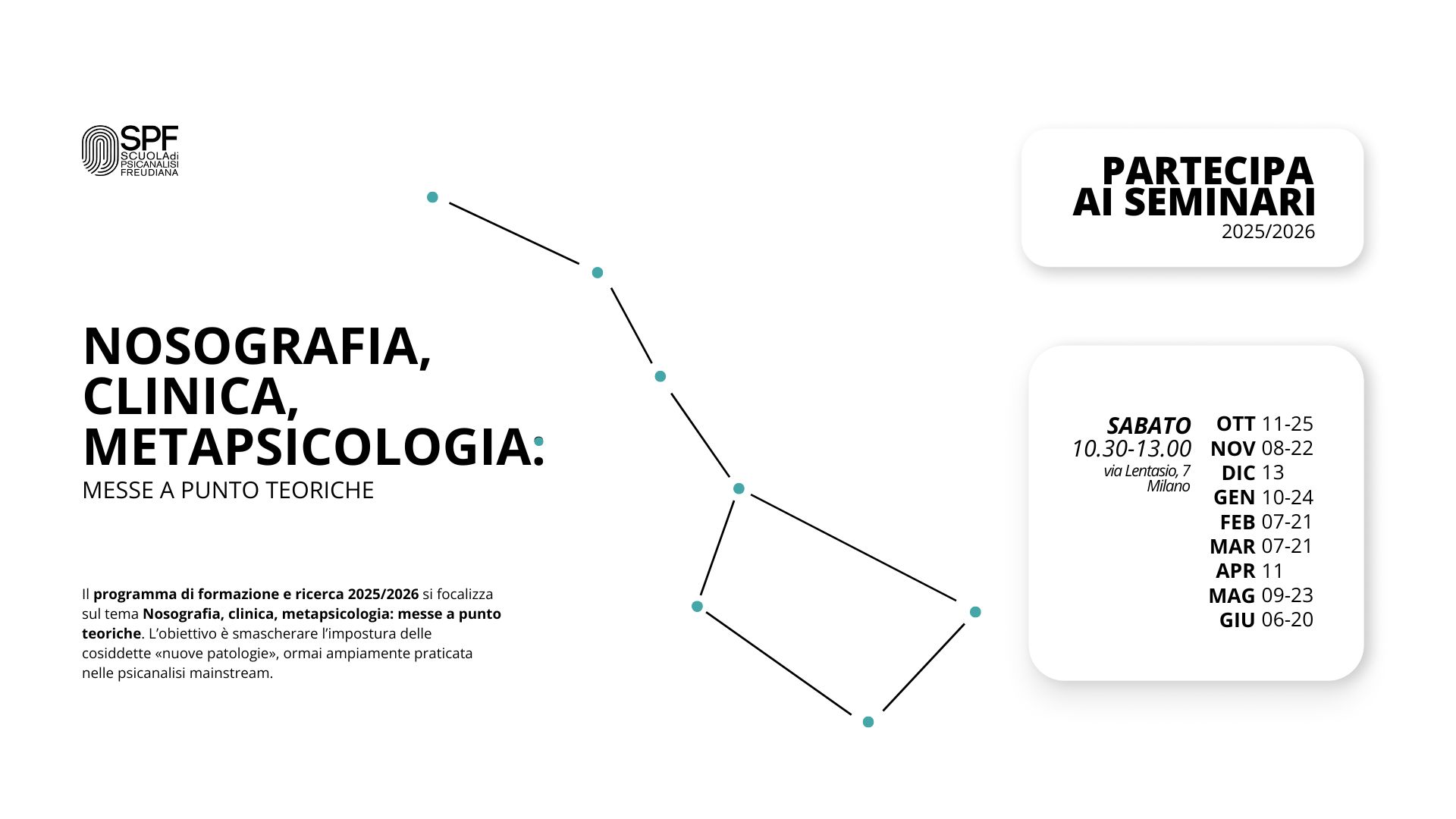
The 2025/2026 programme focuses on the theme Nosography, Clinic, Metapsychology: Theoretical Clarifications. The aim is to expose the imposture behind the so-called “new pathologies”, a notion widely embraced in mainstream psychoanalysis today.
Over the past fifty years, classical nosography has been thoroughly dismantled and reduced to a mere catalogue of symptoms (see DSM). These symptoms, once stripped of their structural and metapsychological contexts, are now presented as if they constitute new disorders—requiring new therapies. This shift has led to the widespread inflation of symptomatology and a deep-rooted psychiatrisation of society as a whole. In order to remain relevant within this new paradigm, many psychoanalysts have gone along with this imposture, thereby undermining the methodological rigour and diagnostic framework that Freud painstakingly developed.
The course aims to expose in detail the principal nosographic errors—such as those concerning anorexia and bulimia, narcissistic disorders, dyslexia, youth psychopathologies, and the borderline label, among others.
Various clinical cases will be presented to allow participants to witness firsthand the accuracy of these critiques.
These and other issues will be addressed in a broader study aimed at restoring recognition of the unique value of Freudian nosography and the concepts and methodology underpinning it—far from outdated, as is often claimed—and of the substantial theoretical and practical advantages it continues to offer to psychoanalytic practice.
The seminar is open to the public and will consist of 15 biweekly lectures, held on Saturday mornings at 10:30 a.m. at the Scuola di Psicanalisi Freudiana headquarters (Via Lentasio 7, Milan).
This theme will also be taken up in part within the Study Group on the Foundations of the Freudian Work (open to SPF members), which will involve a comparative reading of Freud’s theory alongside that of major psychoanalysts, with a critical approach that highlights both divergences and well-founded contributions. The objective is to achieve a deeper understanding of Freud’s thought through a close reading of his core texts.
Expected Learning Outcomes
- To master the concepts and methods underpinning Freudian clinical practice.
- To critically engage with the ambiguities, conceptual errors, and methodological flaws of contemporary psychoanalytic clinics, using clinical cases as a point of departure.
- To develop a nosography—rooted in the Freudian tradition—as a rigorous and scientific form of clinical categorisation.
Calendar
-
October: 11–25
-
November: 8–22
-
December: 13
-
January: 10–24
-
February: 7–21
-
March: 7–21
-
April: 11
-
May: 9–23
-
June: 6–20
Bibliography
- Freud, S., OSF, Vol. V, Analisi della fobia di un bambino di cinque anni (Caso clinico del piccolo Hans). Vedi anche Ferenczi, S., Il piccolo uomo-gallo, Opere, Vol. II, pp. 54-60.
- Freud, S., OSF, Vol. III, Interpretazione dei sogni, pp. 142-145 (il sogno della “macellaia” isterica). Vedi anche Abraham, K., Opere, Vol. I.
- Lacan, J., Il seminario. Libro V. Le formazioni dell’inconscio, p. 373, dove riprende tale sogno. Vedi anche Recalcati, M., Jacques Lacan. La clinica psicoanalitica: struttura e soggetto, pp. 315-316.
- Lacan, J., testi sul caso clinico dell’uomo dalle cervella fresche, come:
- Lacan, J., Il Seminario. Libro I. Gli scritti tecnici di Freud
- Lacan, J., Il Seminario. Libro III. Le psicosi
- Lacan, J., Scritti
- Barnhill, J., (a cura di), DSM 5 TR – Casi clinici (500 casi in stile DSM sulle cosiddette “nuove patologie”)
- Kernberg, O., Narcisismo, aggressività e autodistruttività
- Kernberg, O., Sul trattamento del narcisismo patologico (narcisismo come patologia)
- Kohut, H., Le due analisi del signor Z
- Mitchell, S., Il caso Connie in Il modello relazionale. Dall’attaccamento all’intersoggettività
- Jung, C. G., Tipi psicologici, Opere, Vol. 6. Vedi anche la critica di Ferenczi, S., A proposito di “Contributo allo studio dei tipi psicologici” di Carl Gustav Jung, in Ferenczi, S., Opere, Vol. II, pp. 146-147.
- Jung, C. G., Ricerche sperimentali, Opere, Vol. 2.2
- Recalcati, M. (a cura di), Civiltà e disagio: forme contemporanee della psicopatologia
- Recalcati, M., Le nuove melanconie
- Recalcati, M., L’ultima cena. Anoressia e bulimia
- Recalcati, M., L’uomo senza inconscio. Figure della nuova clinica psicoanalitica
- Bowlby, J., Una base sicura. Applicazioni cliniche della teoria dell’attaccamento
- Greenberg, J., Mitchell, S., Le relazioni oggettuali nella teoria psicoanalitica
- Ferenczi, S., Opere, Vol. II (ove sono citati molti casi clinici o situazioni cliniche interessanti. Si tratta del volume degli scritti composti tra il 1913 e il 1919).
- Mahler, M., Le psicosi infantili